What is Endpoint Security?

Endpoint Security is the practice of preventing bad activity and initiatives from exploiting endpoints or points of entry of end-user gadgets such as computers, laptops, as well as mobile gadgets. Endpoint security products guard against cybersecurity dangers on a system or even in the cloud. Se Endpoint has progressed from simple antivirus software to better protection against malware attacks and developing zero-day risks.
Malicious, hacktivists, Nation-states, organized crime, and unintentional informant threats pose a threat to organizations of every type. Endpoint security is frequently regarded as the forefront of cybersecurity, as well as this is one of the very first places organizations look to safeguard their network services.
Why is Endpoint Security Critical?
For a variety of causes, an endpoint defense platform is an essential component of corporate cybersecurity. To begin, in today’s corporate world, info is frequently the most useful asset a business has—and losing that info or accessibility to that info could put the whole business in jeopardy. Companies have had to deal with not just an increase in the total count of endpoints but also an increase in the variety of endpoints. Such factors create corporate endpoint security extra complicated on their own. However, they are exacerbated by working remotely and BYOD regulations, which render perimeter security ineffective and create security flaws. The risk landscape is also becoming more complex:
How Endpoint Security Works
Endpoint protection is the practice of securing the information and workflows affiliated with individually connected gadgets. Endpoint protection platforms (EPP) function by inspecting files as they join the system. Modern EPPs leverage the strength of the cloud to store an ever-growing dataset of risk information, relieving endpoints of the crapware associated with archiving all this data locally, as well as the servicing necessary to keep such datasets updated. Accessing this information in the cloud as well improves speed as well as scalability.
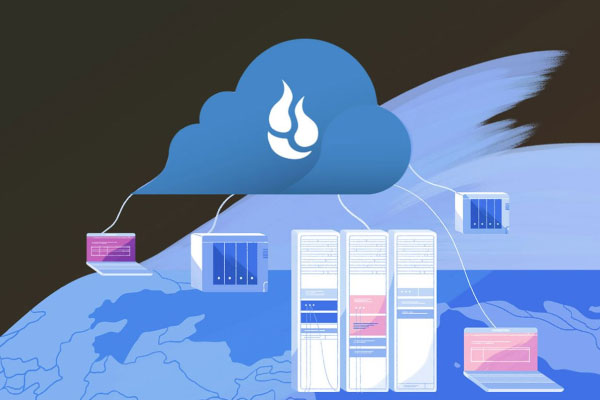
The EPP offers system administrators a centralized console that is downloaded on a gateway node or server, as well as enables cybersecurity experts to remotely access security for every device. The customer software is then delegated to every endpoint; it could be conveyed as a SaaS as well as controlled remotely, or it could be downloaded on the device straightforwardly. As Once the endpoint is configured, the customer software could push upgrades towards the endpoints as needed, authorize log-in attempts by every device, and manage corporate regulations from a single location. EPPs protect endpoints through access controls (which prevent the use of dangerous or unauthorized applications) as well as encryption (which enables avoiding data loss).
Endpoint Security Elements
Endpoint protection software will generally have the following key components:
- Machine learning categorization detects zero-day risks in close real-time.
- Antimalware as well as antivirus protection that is advanced enough to defend, detect, as well as accurate malware across numerous endpoint devices as well as operating devices.
- Proactive web protection to confirm safe web surfing
- Data Analysis is used to prevent data loss and also exfiltration.
- Integrated firewall to prevent malicious network threats
- Email gateway to prevent phishing as well as social engineering attacks on your staff members.
- Threat forensics that is actionable to enable administrators to rapidly isolate infections
- Insider risk defense to protect against unintended and malicious acts
- The platform for centralized endpoint management to enhance visibility as well as simplify processes
- Email, disc encryption, and endpoint are used to avoid data exfiltration.
What Constitutes an Endpoint?
Endpoints can include devices that are more generally perceived as:
- Printers
- Laptops
- Medical devices
- Tablets
- ATM machines
- Mobile devices
- Servers
- Smartwatches
An endpoint is a gadget that is attached to a system. With the increasing prominence of BYOD and IoT, the amount of individual connected systems to a company’s network could quickly attain tens as well as hundreds of thousands.
Endpoint Security Platforms Versus Traditional Antivirus
EPP, as well as traditional antivirus answers, differ in several important ways.
- Network Security vs. Endpoint Security: Which Is Better? Antivirus software is developed to protect a solo endpoint by providing visibility into the same endpoint, and in many instances, only from the same endpoint. Endpoint protection software, on the other hand, examines the entire enterprise system and can provide visibility into all linked endpoints through a single site.
- Administration: Previously, antivirus options depended on the consumer to individually update datasets or to enable updates at pre-determined times. EPPs provide interrelated security by offloading administration to the enterprise Information Technology or cybersecurity crew.
- Protection: Conventional antivirus solutions rely on signature-based identification to diagnose viruses. This intended that if someone’s company had been Patient Zero, or if their users hadn’t lately upgraded their antivirus software, one could still be in danger. Today’s EPP options are automatically kept updated by leveraging the cloud. Furthermore, previously unknown risks can be discovered through the usage of advanced technology such as behavioral analysis.
What Distinguishes Enterprise Endpoint Security from Consumer Endpoint Security
Endpoint Security in the Enterprise
- Best at handling diverse endpoint accumulation
- Good at handling diverse endpoint accumulations
- Software for central managerial hubs
- Administration functionality via the internet
- Remotely verifies endpoint protection on gadgets
- Patches are applied to all relating endpoints.
- Modified authorizations are required.
- Monitoring of employee devices, actions, and behavior
Endpoint Security for Consumers
- Only a limited number of solo user endpoints must be managed.
- Only a limited number of solo user endpoints must be managed.
- Endpoints are set up as well as configured individually.
- Distant management is rarely required.
- Endpoint security is configured directly on the device.
- Every device’s automatic upgrades are enabled by the user.
- Administrative authorizations are used.
- Activity and behavior are restricted to a single user.