What Exactly is Cloud Backup and How Does It Work?

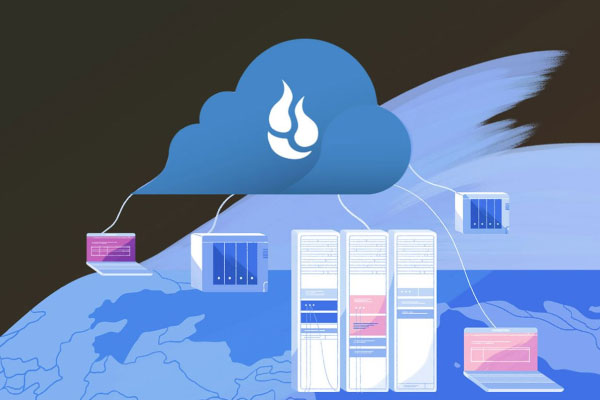
Cloud backup, usually referred to as online restoration or remote data recovery, is a method of storing a duplicate of an actual or digital data file in a second, off-site place in the event of hardware failure or disaster. A third-party provider often hosts the secondary system as well as data management systems, charging the backup client a price based on storage capacity or capacities used, data transfer bandwidth, number of users, number of servers, or the number of multitudes data is viewed.
Applying cloud backup data can enhance a company’s data security plan without adding to the burden of information and technology (IT) workers. The labor savings may be big enough to cover some of the increased expenses related to cloud recovery, including data transfer fees.
What Exactly is the Cloud?
Cloud computing is a catch-all phrase for hosted services supplied through the internet. Unlike conventional web hosting, cloud hosting is supplied on request, is elastic (meaning the client can utilize as often or as less of the service as needed), and is handled through the service supplier. A cloud could also be public or private. A public cloud, including Amazon Web Services (AWS), offers services to anybody on the web, whereas a private cloud provides hosted resources to a small number of customers.
How Does Cloud Backup Operate?

A backup program in a company’s data center copies data as well as saves it on separate media or the other storing system for quick accessibility in the case of a restoration crisis. Although there are several alternatives and techniques to off-site recovery, many firms rely on cloud recovery as their off-site provision. If an organization provides its cloud solution, the off-site system may be owned by the firm, but the payback mechanism would be the same if the company utilizes a service provider to operate the cloud recovery environment.
When a company hires a cloud recovery service, the initial action is to make a thorough recovery of the information that has to be safeguarded. Because of the vast amount of information being downloaded, this first backup might often take days to complete uploading across a network. In a 3-2-1 recovery plan, if an organization has three duplicates of information on two separate media, minimum of one duplicate of the recovered data must be transported to an off-site restore facility so that it becomes available if on-site services are down.
Using a process called cloud seeding, a cloud recovery provider delivers a storing device — including a tape cartridge or hard drive — to its newest client, who then recovers the data remotely onto the disk as well as delivers it to the supplier. This approach eliminates the requirement to transfer the preliminary data to the restoration provider across the network.
How is Data Restored?
Cloud recovery services are often constructed around a consumer software program that runs on a period dictated by the type of service ordered and the needs of the user. If a client has subscribed for daily backups, for instance, the program gathers, compresses, ciphers, and uploads information to the cloud storage provider’s facilities every 24 hours. The provider may only offer incremental recoveries after the first full restoration to limit the number of bandwidth utilized and the time required to transmit files.
Cloud recovery services frequently contain the hardware and software components required to secure business resources, such as Outlook and SQL Server programs. Though a user uses its very own backup program or the software provided by the cloud recovery provider, the business restores backed-up information using the same software. Restorations might be done on a file-by-file, volume-by-volume, or complete backup restoration.
If the amount of information to be recovered is big, the cloud recovery provider may send the information on a whole disk array that the client may connect to its systems to restore its information. This is essentially a reverse seeding operation. It might take a very long period to restore a large amount of information via a network.
A fundamental advantage of cloud recovery restores is that they may be performed from virtually any desktop. If a company’s data center is inaccessible, it might restore its data immediately to a disaster restoration site in another location.
Advantages and Disadvantages
Before deciding on cloud storage as a recovery plan, it is critical to assess the possible benefits and drawbacks of storing information with a foreign entity. The following are some of the benefits of cloud backup:
Advantages:
- In general, it is less expensive to recover files via a cloud recovery service than it is to establish and run an in-house recovery operation. The accompanying cloud backup prices will climb as the quantity of recovery data increases, but budgets will probably continue making cloud recovery an appealing option. Certain providers could provide unpaid cloud backup; however, the number of backup capacity often has a storage size, making free backup suitable for certain home customers and only the tiniest of businesses.
- Because the cloud is extensible, an industry’s data may be readily supported by a cloud recovery provider as it expands. However, as big data increases, enterprises must be careful of rising expenses. A corporation may better control the quantity of information it backups to the cloud by removing idle data as well as transferring it to archives.
- Cloud recoveries are easier to maintain since service providers handle many of the administrative responsibilities that are necessary with conventional types of backup.
- Because recoveries are made outside of the workplace network, they are often more safe against ransomware assaults. Recovery data is normally encrypted before being transported from the client’s premises to the cloud recovery service, and it is generally ciphered on the storage devices of the provider.
Disadvantages:
Despite its numerous advantages, there are certain drawbacks and limitations to utilizing a cloud recovery service, which include:
- Backup speed is determined by bandwidth as well as latency. For instance, if many firms are utilizing the same connection to the internet, the recovery may be slower. This may be inconvenient when recovering data, but it may be a far bigger problem when attempting to restore info from the server.
- When recovering huge quantities of information to the cloud, charges can quickly add up.
- Data is transported beyond a company’s premises and technology, as with any usage of cloud storing, and under the management of an external supplier. As a result, it is critical to understand as much as feasible regarding the cloud recovery provider’s technology, physical safety methods, information protection methodology, and financial sustainability.