Dental Implants by Medicare for Seniors
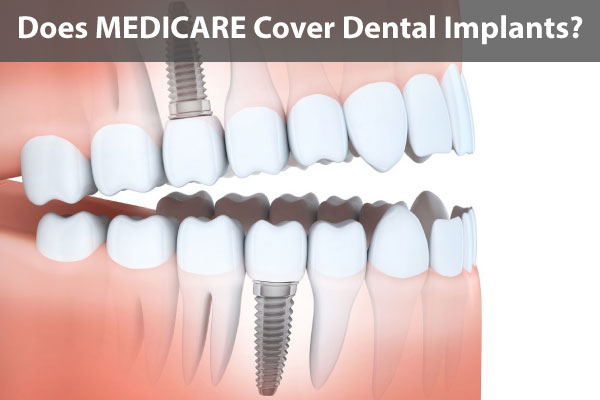
The majority of dental implant charges are borne by Medicare beneficiaries. Medicare regulations expressly state that “services in conjunction with the maintenance, therapy, filling, extraction, or replacing of teeth or elements immediately maintaining teeth” are not covered.
Each rule, though, has an exemption, and you may discover multiple loopholes. Medicare may cover specified early-stage dental implant therapy processes, including CAT scans, removals, and bone grafts for seniors who have medically essential reasons.
Meanwhile, persons over the age of sixty years can still obtain individual health coverage and take benefit of IRS provisions to significantly reduce rates. Furthermore, Medicaid may be able to assist you.
Seniors’ Dental Implant Expenses Could Be Reduced
Because elders on Medicare often pay for implant placement down-and-out, discovering strategies to minimize costs is crucial – particularly for such people who can’t fixed retirement income hardly meets basic living expenditures.
Implants at No Cost
Unpaid dental replacements for Medicare recipients are a lengthy wager that few people have a genuine chance of winning. While some nonprofits give pro gratis services, the need often outstrips the availability.
Reducing down-and-out expenses is a more fair ambition, which you may achieve by receiving certain services for no cost while contributing the full price for someone else.
Dentists frequently provide high discounts to customers who are likely to earn future income.
- Has a mouth full of broken teeth that need to be repaired?
- Possess the financial means to spend on substantial labor.
The first criteria (bad oral health) is frequently met by elderly individuals, whereas the second requirement is frequently not met (financial requirements). Health coverage, Medicaid, plus tax benefits can all assist.
Insurance for Seniors
Dental insurance that covers implants, as well as other operations, is one option for elders over the age of sixty-five to gain the financial ability to spend and drastically reduce expenses. You can get coverage that has no maximum age restriction.
However, be certain that you grasp many crucial facts of elderly dental insurance to cover implants since they will influence whether they make treatment more reasonable.
- In-network orthodontists are not permitted to cost over the approved amount, which might spare you a lot of money over time.
- Schemes with no waiting periods provide graded profits, in which the proportion paid increases over time.
- Exemptions for missing teeth indicate that the insurance only pertains to teeth extracted after the start date.
Medicaid
Irrespective of the cause, Medicaid may fund a few of the early dental implant procedures done by oral specialists for dual-qualified seniors. Having these early-stage treatments covered for free reduces total expenditures.
- CAT Scanner
- Extractions
- Using bone grafts
Seniors’ dental work is occasionally covered by Medicaid; however, payments differ by state. Furthermore, the least costly treatment criteria mean that no matter where you reside, the program will never spend on dental implants.
Seniors who are dually qualified for Medicare and Medicaid come into five groups:
- Supplemental Security Income (SSI) recipients
- Qualified Disabled Working Individual (QDWI)
- Qualified Medicare Beneficiary (QMB)
- Qualifying Individual (QI)
- Specified Low-Income Medicare Beneficiary (SLMB)
Programs for Funding
Dental implantation funding is another option for seniors who want to reduce their healthcare expenditures. Yes, you will have to spend interest and acquisition costs to lend cash, but it will allow you to access larger secret savings.
Your dental implant costs are eligible for deduction in that year you spend at the dentist, not that year you get treatment. By combining your expenditures into a single almanac year, you will just have to meet the 7.5 percent AGI requirement for taxable dental and medical costs once.
In addition, your Medicare payments are deducted from the total.
Tax Credits
Dental work is tax-deductible, which means that the IRS may grant large savings to Medicare beneficiaries who have intense physical plus dental health costs. Consolidating costs into one year, on either hand, results in the largest savings!
The cost for a whole mouth repair starts at 10,000USD and goes up from there. Because of the high cost, you might easily surpass the two expenditure criteria and greatly reduce costs.
- Itemized deductions must be more than the personal allowance.
- 12,550USD for an individual
- 25,100USD total
- Dental and medical costs that are not reimbursed should exceed 7.5 percent of AGI.
Medicare Covers Dental Repairs for Elders
Seniors looking for Medicare-covered dental implants must resolve a two-part puzzle if they desire to save money after retirement. When dependent on restricted pension payments, affordability is crucial.
- The extent of Medicare’s reimbursement for oral health treatment varies.
- Beneficial influence (Part C) is more comprehensive.
- Sections A, B, and D, plus supplements, are constrained.
- Finding providers who accept reimbursement might be difficult.
Dental Repairs Are Covered by Medicare
Firstly, if you desire Medicaid-covered dental repairs for elders, pay careful attention throughout the enrollment period in November as well as December. Your decisions will then influence whether or not your insurance will support any treatment stages.
Advantage Programs
Seniors who have Medicare Advantage strategies that include dental work may be able to save money on their treatment. Bear that in mind when you plan for the coming year’s requirements during the enrollment period.
Medicare Advantage strategies include Medicare Sections A, B, and D (as well as occasionally oral care) and are supplied by a controlled care organization (PPO or HMO). You may experience two sorts of advantages.
- Claim amounts are put to a yearly optimum (1,300USD on average).
- Cheaper costs through in-network suppliers charging the maximum allowed
Sections A, B, and D
With the exception of a few tightly specified early measures considered medically essential, basic Medicare Sections A, B, and D do not fund dental implants for elders.
- Jaw reconstruction along with an unintentional injury
- Tooth removal in anticipation of cancer radiation therapy
The Centers for Medicare & Medicaid Services (CMS) guidelines expressly state that “services in conjunction with the treatment, repair, filling, extraction, or restoration of teeth or components immediately supporting teeth” are expressly prohibited.
- Section A (inpatient hospital care)
- Section B (services and supplies)
- Section D (prescription drug coverage)