Advantages of Having a Cash-Back Credit Cards

Cash-back credit cards provide the most versatile and adaptable rewards currency available: cash. Whenever it comes to reclaiming points as well as miles, they could have a spongy value as well as limited versatility. However, a dollar through cash-back is now a dollar that can be spent anywhere.
As well, cash-back cards generally are the most straightforward rewards cards: users get a set amount of money back for each dollar they spend. Users might receive more money back for specific types of purchases, such as those made at restaurant chains or petrol stations.
If the user spends 60USD at the restaurant and uses a card that offers three per cent back on eatery purchases, the user has just received 1.80USD for doing nothing. Consider the following: A cash-back bonus card is equivalent to receiving a rebate on all purchases made through the card. The fun begins when users use this same card everywhere as well as their cash-back accumulates.
Even for the ideal cash-back, credit cards are not quite as eye-catching as rewards point credit cards, but like the rabbit and the turtle, slow and steady ends up winning the run.
Credit cards with cash-back variety
Cash-back credit cards are classified into three types based on how you earn cash rewards.
One-time fee
Plain cash-back cards offer a fixed proportion of cash back no matter what you purchase through the card. A good starting point is 1.5 per cent cash-back on every single thing. However, numerous cards offer you back two per cent or more.
Examples:
- Citi® Double Cash Card – BT offer for eighteen months. This card provides users two per cent cash-back, including all items purchased: One per cent for each dollar users splurge as well as another one per cent for each dollar user pays off.
- Capital One Quicksilver Cash Rewards Credit Card is a cash rewards credit card issued by Capital One. It offers an unlimited 1.5 per cent cash-back upon every single thing, as well as a sign-up reward.
Tiered
Tiered cards receive a greater rate in particular areas of expenditure, like grocery shopping or gas, as well as typically earn one per cent on all other purchases. Some cards allow you to select which classifications earn the highest rewards.
Examples:
- AEBC Card Earn six per cent back United States grocery stores on up to $6,000USD spent per year (after which one per cent back); six per cent back on chosen US streaming platforms; and three per cent back United States gas stations as well as transit. Every other expenditure earns a one per cent return. Terms and conditions apply.
- The Capital One SavorOne Cash Rewards Credit Card is a cash rewards credit card issued by Capital One. Earn three per cent cash-back at grocery stores as well as restaurants, as well as one per cent cash-back on qualified streaming offerings and amusement, and one per cent cash-back on every other purchase.
Rotated Categories
Credit cards with rotary bonus classifications offer the highest cash-back price, usually 5%, in particular areas that regularly alter — generally every three months. All else garners a 1% commission on every single thing. Every quarter, you must “opt-in” or “stimulate” the reward categories digitally.
Examples:
- Cash Back from Discover it®.
- Freedom FlexSM by Chase.
Typical cash-back reward categorization
Numerous cash-back cards offer higher rewards rates on specific purchases. This is usually determined by where users utilize the card instead of what users purchase with it. With the exception of flat-rate cards, users will notice this with all bonus cards.
Prevalent bonus categories include:
- Supermarkets: This categorization is sometimes referred to as “grocery shopping” by card companies, but the bonuses are defined by the nature of the store, not the particular goods you buy. So it pertains to grocery shopping, cleaning materials, toiletries, ready-to-eat meals, as well as anything else purchased at the grocery store. A gift voucher for a restaurant or seller is frequently available at the grocery store as well as adds up as a grocery store buying. Warehouse clubs as well as superstores, such as Walmart and Target, are frequently excluded. It thus could be among the greatest valuable classifications for larger homes to receive accelerated bonuses.
- Restaurants: This category, sometimes referred to as “dining,” typically involves all from fast-food eateries as well as delivering pizzas to fair-skinned fine devour. For expedited rewards, one “s entire restaurant budget, such as the server’s tip, includes.
- Gasoline stations: This is commonly referred to as “gas” and typically refers to conventional gasoline petrol pumps such as BP, Mobil, and Shell. It’s doesn’t usually apply to petrol stations allied with grocery stores or discount stores. It frequently counts all users who buy at the affiliated grocery store as well, though some cards just count gas compensated at the PUMP. Gas appears to be a very useful classification, but unless you’re a lengthy commuter, most families don’t purchase petrol stations as they did at, say, grocery stores.
That last juncture hints at the identifier to cash-back classifications: the ideal ones seem to be those where users splurge the most cash every month. So a reward category like electronic streaming platforms may be relatively less valuable even though the user may spend cash on Spotify and Netflix; you most likely do not spend a lot.
Other possible bonus classifications include amusement, pharmacies, hardware stores, resellers clubs, and digital wallet buying. For a 1/4, rotating reward categorization cards may designate particular retailers, such as Walmart or Amazon, for bonus prizes.
How to Evaluate Cash-Benefit Credit Cards
That what cash-back credit card is best for oneself varies depending on how users spend their cash as well as how patient users are with tracking bonus categories. Take into account a tiered or reward categorical card if users splurge a lot of money in specific categories, such as fuel or grocery items. Choose a flat-rate card if users don’t want to memorize which of their cards has which reward categories.
After the user has determined which sort of cash-back credit card is best for them, take into account the following factors:
The Annual Fee
No one wants to submit the fee — and many cash-back cards don’t even have one — but it can sometimes be advantageous. This is though cards with yearly fees frequently offer more enticing rewards, such as higher cash-back prices on all or some of one’s expenditure.
The core is to ensure that paying the yearly fee is arithmetically justified. Consider the fee to be a deduction from one “s yearly cash-back total.
Sign-up Incentive
A money sign-up reward is pleasant to have if one “s regular expenditure is sufficient to receive it. (Typically, you’ll need to invest $500 – $1,000 during the 1st few months.) It’s free money. Alternatively, for such a card has a yearly fee, it may recompense for the service charge for a couple of years.
However, don’t dismiss cash-back cards that don’t come with a bonus. Rewards are less prevalent than cash-back cards, and also they are lower in value when compared to travel credit cards. Based on how much users spend and where they spend it, greater bonus rates on one card may be a better bargain than a reward and a lower interest rate.
Flexibility
And what were the guidelines for obtaining your money back? A few cards have such a minimum redemption amount — for example, you may have to obtain $25 in cash-back until you can claim back. A few credit cards enable you to receive cash-back in the form of a statement credit that could be applied to your upcoming credit card invoice. Others let you retrieve cash straight into the bank account whilst you receive a paper check from others through the mail. Some issuers permit you to retrieve rewards for items other than cash-back, such as merch or gift vouchers. Others may permit you to transmit cash-back pts to some other card program where logistical use may yield greater value.
APR of 0% for a limited time
With bonus cards, users don’t wish to take a monthly balance, yet a few cash-back cards provide 0% introductory APR periods on novel items, purchased balance transactions, or both.
Holding an amount from month – to – month incurs interest fees, which can eat away at the worth of one’s rewards. If users anticipate carrying an amount, look for a reduced credit card instead.
Travel cards versus Cash back
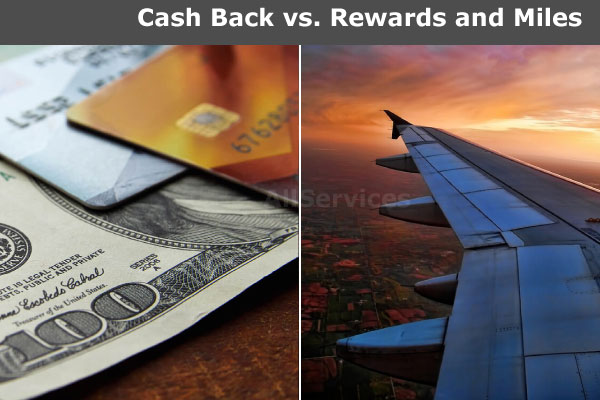
Cash-back cards are simple to comprehend and utilize, yet they could be tedious. This is particularly true while tried to compare to travel cards, which could be idealistic — projections of earning an unrestricted flight to Bora Bora in the first class or even a night at a swanky New York City hotel.
Furthermore, co-branded travel cards for hotels and airlines may provide you with benefits that no other card will. Airline cards, for example, frequently provide free inspected bags as well as prioritized boarding. Several of the top hotel credit cards offer a free night’s stay every year.
The benefits and drawbacks of utilizing a cash-back card
Cash-back cards are beneficial to many individuals, but not to all. Here’s a speedy rundown of their benefits and drawbacks when compared to other kinds of cards.
Why it’s worthwhile to get a Cash-back card
The best currency for rewards. When it comes to flexibility, cash reigns supreme. No one can change its value, so users can splurge it wherever they want. Users might not have to put it on hold for years to accrue sufficient miles or scores to claim back for an unrestricted flight or guesthouse stay, as users might have a travel credit card.
Simplification. Cash-back cards are far simpler to comprehend and utilise than other kinds of cards, which leaves users wondering if they’re getting the most bang for their buck.
There are no or very low yearly fees. If users want outstanding cash-back benefits, users can find lots of options with no yearly fee or sensible fees.
Disadvantages: Why the cash-back card could not be right for you
Sign-up rewards are relatively lesser. Bonuses can range from nothing to approximately $200, with a few travel-card rewards exceeding $500.
There is no disproportionate value. Earned points through travel cards can oftentimes be converted into enormous amounts of money, far surpassing the significance of some cash-back card.
Insufficient for holding a cash balance. A few cash-back cards offer a great 0% introductory APR period, but the majority do not. If users carry an amount, they will almost certainly pay extra in profits than they will receive in cash-back bonuses.